Click to see larger pictures. Make sure your window wide enough to view pictures.
點擊看較大圖片, 點擊CTRL(+)看較大字體. Topics list is at bottom of page.

Minoan Civilization, Mycenaean civilization 米諾斯文明,邁錫尼文明

自從克里特島(Crete)發現了石英岩手斧, 就知道早在13萬年前, 在大陸希臘人來之前,該島就有人居住。 大約在公元前12,000年左右, 最早的現代人類, 渡越地中海在島上定居。 他們殺死了島上的肉食動物,或至少使它們在最後冰河期死亡。 在公元前7,000年左右,另一次大規模入侵, 將新石器時代的人類帶到了島上。 在接下來的500年裡,克里特人改變了他們的日常習慣,從狩獵和採集, 轉變為種植和養殖動物的生活方式。 在新石器時代,早期克里特島文化發展, 有來自基克拉迪群島(Cyclades)和埃及的影響。 Before the mainland Geeks came to Crete Island, the island saw habitation as early as 130,000 years ago when quartzite hand axes were found. The earliest settlers crossing in the Mediterranean to Crete was around 12,000 BC. They killed off carnivorous animals on the island, or at least assisted their slow death during the last Ice Age. Around 7,000 BC, another large invasion brought Neolithic people to the island. Throughout the next 500 years Neolithic Cretans changed their daily habits, switching from hunting and gathering, to a more settled lifestyle of farming and rearing animals. In the Neolithic period, some of the early influences upon the development of Cretan culture arise from the Cyclades and Egypt.
米諾斯文明(Minoan)大約是從公元前2,700年到1,450年, 文化記錄是用稱為“線性A”(公元前2,500-1,450, 圖1上)的未破解的文字寫成的,在經歷了一個衰落的後期,最終在公元前1,100年左右結束, 被希臘大陸後來的邁錫尼文明(Mycenaean)吸收。邁錫尼希臘語是用線性B(公元前1,425-1,200)寫的,想必改編自線性A(圖1下), 它比希臘字母早幾個世紀,是唯一被破譯的青銅時代愛琴海文字。 The Minoan civilization was flourished roughly from 2,700 to 1,450 BC, cultural records are written in the undeciphered script known as "Linear A"(2,500-1,450 BC, Picture1 upper), before a late period of decline, finally ending around 1,100 BC. It preceded and was absorbed by the Greek mainland Mycenaean civilization. The Mycenaean Greek was written in Linear B (1,425-1,200 BC) which is presumably descended from the older Linear A (Picture1 lower). The script predates the Greek alphabet by several centuries and is the only one of the Bronze Age Aegean scripts to have been deciphered.

When we were in Santorini, I didn't get to go Santorini museum which was closed on that day. Instead I went to Akrotiri archaeological site in the southern island and shot a ruin West House reconstruction video shown on that site. I will introduce the archaeological finds in the videos in next post.
Mycenaean civilization was the last phase of the Bronze Age in Ancient Greece, spanning the period from approximately 1,600–1,100 BC. It represents the first advanced civilization in mainland Greece, with its palatial states, urban organization, works of art, and writing system. 邁錫尼文明是古希臘青銅時代的最後階段,跨越公元前1,600年至1,100年的時期。 它代表了希臘大陸的第一個先進文明,其富麗堂皇的國家,城市組織,藝術作品和書寫系統。

Constumes and hair styles inspired by ancient Minoan drawings (der-ying's fashion pictures). 服飾和髮型靈感來自古老的繪畫。

希臘 Greece Trip Videos 2018

The Greece trip videos are on Youtube. Below 1st video is the starting video of a playlist which will play all videos.

大約3600年前,猛烈的火山爆發摧毀了Santorini島,留下了幾百米厚的火山灰。 Akrotiri鎮像Pompeii一樣被埋葬,為現代考古學家保留了許多精美的壁畫和藝術品。 其中West House是一棟三層樓的建築,擁有令人驚嘆的現代建築和佈局。
I didn't go Santorini museum (closed that day) but went to Akrotiri archaeological site and shot a ruin West House reconstruction video shown on that site. Videos were remade in 11/11/2020. Added verbal explanation, subtitles in English and reconstructed ancient music found in that area.

First video below shows the Akrotiri archaeological data and artifacts. Second video shows the amazing artifacts in Heraklion Archaeological Museum on Crete Island.

About 3,600 years ago, the most violent volcanic eruption devastated Santorini island and left a few hundred meters thick volcanic ash. The town Akrotiri was buried like Pompeii which in turn preserved many fine frescoes and artworks for modern archeologists. The West House is a three-story building with amazing modern architecture and layouts. They even had second-floor plumbing.

The West House is a well-organized building. In the ground floor there are storerooms, workshops, a kitchen and a mill-installation. The first floor is occupied by a spacious chamber used for weaving activities, a room for the storage mainly of clay vessels, a lavatory and two rooms, the one next to the other, embellished with magnificent murals. The first was decorated with the two frescoes of the Fishermen, the fresco of the Young Priestess and the famous Flotilla miniature frieze. The latter ran around all the four walls and depicted a major overseas voyage, in the course of which, the fleet visited several harbors and towns. The final destination of the fleet with the rocky landscape, the configuration of the harbor and the multi-storied buildings is identified with the port of Akrotiri itself.

The walls of the second room were decorated with a single motif which was repeated eight times. This motif is identified as the cabin at the stern of the ships depicted in the miniature frieze. Flotilla, depicts a highly developed society. Excavations and research on the site continue. The West House is a wealthy 3-storey residence with elaborate drainage & wall frescoes.

The settlement was destroyed in the Theran eruption in 1,600 BC and buried in volcanic ash, which preserved the remains of fine frescoes and many objects and artworks. The settlement has been suggested as a possible inspiration for Plato's story of Atlantis.

In one of the rooms in Akrotiri there was a narrow (40 cm, or 12.5 inch) fresco along the top of the walls. The frescos on the four walls displayed different scenes that might or might not have been thematically related. On one wall was the so-called Marine Festival Fresco, which shows a fleet of ships leaving one city and arriving at another. This fresco has had many interpretations, including that it represents a military invasion (on another wall there is a scene of what looks like a naval battle).

巴爾幹半島 Balkans (+希臘 Greece precedent posts) 2018

When finish this page, click "Older Posts" at bottom right to go to next page. Total 2 pages (1).
下面中文選擇翻譯自英文,名詞可能不容易了解, 詳情請讀英文。
巴爾幹半島(Balkans)名字來自巴爾幹山脈,從塞爾維亞-保加利亞邊境延伸至黑海, 右下圖上面的藍線使用多瑙河(Danube-Sava-Soča)邊界。 這地區是新石器時代(公元前7000年)中東農業向歐洲蔓延的路線。 在古代,這個地區有希臘人,伊利里亞人,培奧尼亞人,色雷斯和達契亞人等等。波斯帝國在公元前6世紀至5世紀入侵巴爾幹半島。公元2世紀,羅馬帝國征服了該地區,並帶來了羅馬文化和拉丁語。在6世紀,保加爾人和斯拉夫人抵達並組建了保加利亞帝國。在中世紀,拜占庭羅馬(395-1453)和保加利亞帝國之間發生了一系列戰爭。到了16世紀末,奧斯曼帝國從安納托利亞擴展到該地區成為控制力量。 在冷戰期間,巴爾幹地區的大多數國家都是由共產黨政府統治的。冷戰後, 南斯拉夫解散成為斯洛文尼亞,克羅地亞,波斯尼亞和黑塞哥維那,馬其頓,黑山和塞爾維亞。希臘不同意馬其頓共和國(FYRM)的名稱, 事實上希臘國名為Hellas(希臘,粵語發音), 非Greece。
The Balkans takes its name from the Balkan Mountains that stretch from the Serbian-Bulgarian border to the Black Sea.
(Right map) the upper blue line is using the Danube–Sava–Soča river border.
The Balkans have been inhabited since the Paleolithic and are the route by which farming from the Middle East spread to Europe during the Neolithic (7000 BC).
In pre-classical and classical antiquity, this region was home to Greeks, Illyrians, Paeonians, Thracians, Dacians, and other ancient groups.
Persian Empire invaded the Balkans during 6th to 5th century BC.
In 2nd century, Roman Empire conquered most of the region and brought in Roman culture and Latin language.
In 6th century, Bulgars and Slavs arrived and formed the Bulgarian Empire.
During Middle Ages, a series of wars occured between Byzantine Roman (395–1453) and Bulgarian Empires.
By the end of the 16th-century, the Ottoman Empire had become the controlling force in the region after expanding from Anatolia through Thrace to the Balkans.
During the Cold War, most of the countries on the Balkans were governed by communist governments.
Dissolution of Yugoslavia into Slovenia, Croatia, Bosnia and Herzegovina, Macedonia, Montenegro and Serbia. An issue emerged over the name of Republic of Macedonia (FYRM) with Greece. Greece (Greek: Ελλάδα), officially the Hellenic Republic (Greek: Ελληνική Δημοκρατία, Ellinikí Dimokratía), historically also known as Hellas (Ancient Greek: Ἑλλάς)

保加利亞、塞爾維亞、羅馬尼亞 Bulgaria, Serbia & Romania tour

我本來的主題是“巴爾幹半島和希臘之旅”,但它涉及太多的材料,尤其是我們有5天希臘自由行, 拍了很多博物館照片, 所以以後再談希臘。此外,Balkans歷史悠久,有歐洲最古老的國家,許多人包括我們對該地區不了解, 很少人去那裡旅遊, 但現在慢慢改變了。實際上它有3條不同的行程:一條有克羅地亞;另一條有阿爾巴尼亞;我們的有塞爾維亞(事前不了解)。各是非常不同的國家。很幸運的, 我們有一位當地的羅馬尼亞歷史學家作為導遊。特別是Transylvania, 擁有豐富的神話和朦朧的中世紀遺址, 是吸血鬼和西方龍的神秘之地。每個帖子,我都加了照片的鏈接(links),但對於大多數羅馬尼亞地方,我還沒有時間去整理這些照片。My originally topic is "Balkans & Greece Tour", but it involves too many materials, especially the museum pictures taken during the 5-day on our own in Greece. So I will make Greece another topic. Many people don't know much about this area or travel there. In fact it has a long history and oldest countries in Europe. Also, there are actually 3 different itineraries for Balkans tour: one with Croatia; another with Albania; and ours with Serbia. They are very different countries. Luckily, we had a local Romanian historian as tour guide. Especially in Transylvania, it is rich in myth and misty medieval sites and best known as the mysterious land of dracula and western dragons. Each post, I included the links for highlighted pictures except, for most Romanian places, I have not have time to arrange the pictures yet.
點擊觀看我已經上傳的一些旅行視頻。Click to watch some of my already uploaded Trip Videos.

羅馬尼亞 Transylvania: Hunedoara,Sibiu,Sighisoara,Brasov

Transylvania是羅馬尼亞中部和西北部的一個歷史悠久的地區,以喀爾巴阡山脈的東部和南部為界。 它曾經是匈牙利王國的一部分,並在第一次世界大戰後加入羅馬尼亞。它擁有豐富的神話和朦朧的中世紀遺址:大約有100座城堡和堡壘, 以及大約70座堡壘化教堂。 羅馬尼亞最大,保存最完好的城堡和堡壘都可以在這裡找到。 但對於更好奇的旅行者來說,有許多小村莊有老房子和教堂。 它最出名的是吸血鬼和西方龍的神秘之地。Transylvania is a historical region in central and northwestern Romania and is bounded by eastern and southern of Carpathian Mountain Range. It was part of Hungary Kingdom and joined Romania after World War I. It is rich in myth and misty medieval sites: there about 100 castles and fortresses and about 70 fortified churches. Romania's greatest and best preserved castles and fortresses are to be found here. But for the more curious traveler, there are many small villages with old houses and fortified churches. It is best known as the mysterious land of dracula and western dragons.
點擊看在路上視頻。Click to watch on-road video with tour guide's explanation.

歷史History: Dacian Kingdom (1st–2nd centuries), Roman Dacia (2nd–3rd centuries), the Hunnic Empire (4th–5th centuries), the Kingdom of the Gepids (5th–6th centuries), the Avar Khaganate (6th–9th centuries) and the 9th century First Bulgarian Empire. During the late 9th century, western Transylvania was reached by the Hungarian conquerors and later it became part of the Kingdom of Hungary, formed in 1000. After the Battle of Mohács in 1526 it belonged to the Eastern Hungarian Kingdom, from which the Principality of Transylvania emerged. During most of the 16th and 17th centuries, the principality was a vassal state of the Ottoman Empire; however, the principality had dual suzerainty (Ottoman and Habsburg). In 1690, the Habsburgs gained possession of Transylvania through the Hungarian crown. After 1711, Habsburg control of Transylvania was consolidated, and Transylvanian princes were replaced with Habsburg imperial governors. After the Austro-Hungarian Compromise of 1867, the separate status of Transylvania ceased; it was incorporated into the Kingdom of Hungary (Transleithania) as part of the Austrian-Hungarian Empire. After World War I, Transylvania became part of Romania. In 1940 Northern Transylvania reverted to Hungary as a result of the Second Vienna Award, but it was reclaimed by Romania after the end of World War II.

Left picture: Historic rulers of Transylvania and Wallachia.
Dracula is an 1897 Gothic horror novel by Irish author Bram Stoker. The novel tells the story of Count Dracula's attempt to move from Transylvania to England. It is said that the historical Transylvanian-born Vlad the Impaler (also known as Vlad III, Vlad Dracula, Vlad Tepes, left picture middle row 2nd left) of Wallachia is related to the fictional Dracula.
During his main reign (1456–1462), "Vlad the Impaler" is said to have killed from 40,000 to 100,000 European civilians mainly by impaling. However, he is revered as a folk hero by Romanians for driving off the invading Ottoman Turks.

Historically, the name "Dracula" is derived from a Chivalric order called the Order of the Dragon, founded by Sigismund of Luxembourg (then king of Hungary) to uphold Christianity and defend the Empire against the Ottoman Turks. Vlad II Dracul (left picture middle row first left), father of Vlad III, was admitted to the order around 1431. His coinage bore the dragon symbol, from which the name "Dracula" is derived since "dracul" in Romanian means "the dragon". Left picture, the Dacian Draco was the ensign of ancient Dacian troops (see Bucharest museum in below post).

首先,我們參觀了14世紀建造在古老的羅馬防禦工事上的Hunedoara城堡, 這座堡壘多年來經過多次改造, 該城堡的神秘氣氛, 使最近2018年電影“鬼修女”在這裡拍攝。First we visited the mythical 14th century Hunedoara Castle built on old Roman fortifications and tourists are told that it was the place where Vlad the Impaler was (above picture middle 2nd left) held prisoner by John Hunyadi (Iancu de Hunedoara, above picture upper right), Hungary's military leader and regent. This fortress, transformed many times over the years, became the castle of Matthias Corvinus, known as the "Raven King." The mysterious atmosphere surrounding the castle was the setting for a recent 2018 film "The Nun".

Click to see more pictures
We drove to the charming town of Sibiu, with its maze of cobbled streets and baroque squares. This cultural center of Europe attracted many musicians in the 19th century and today is the center of Romania's major music festivals. We saw the houses of the town have eyes.

Click to see more pictures
The next morning, we went to Sighisoara, the best-preserved medieval city in Southeastern Europe with fortified-walled old town which is listed as UNESCO site. Vlad the Impaler (Dracula) is supposed to be born in Sighișoara. His father, Vlad Dracul, the ruler of Wallachia, and his pregnant wife were hosted in this house by the king of Sighișoara between 1431 and 1435, during the Turkish invasion of Valakia.

Click to see more pictures
我們驅車前往位於Transylvania南部的Brasov,周圍環繞著南喀爾巴阡山脈。We drove to Brasov which is located in the central part of the country, surrounded by the Southern Carpathians. The city is notable for being an important center of Transylvanian Saxons in the past, and a large commercial hub on the trade roads between East and West. The Hollywood-style Brasov sign can be seen in central picture. Still don't know who is that lady in the picture.

Click to see more pictures
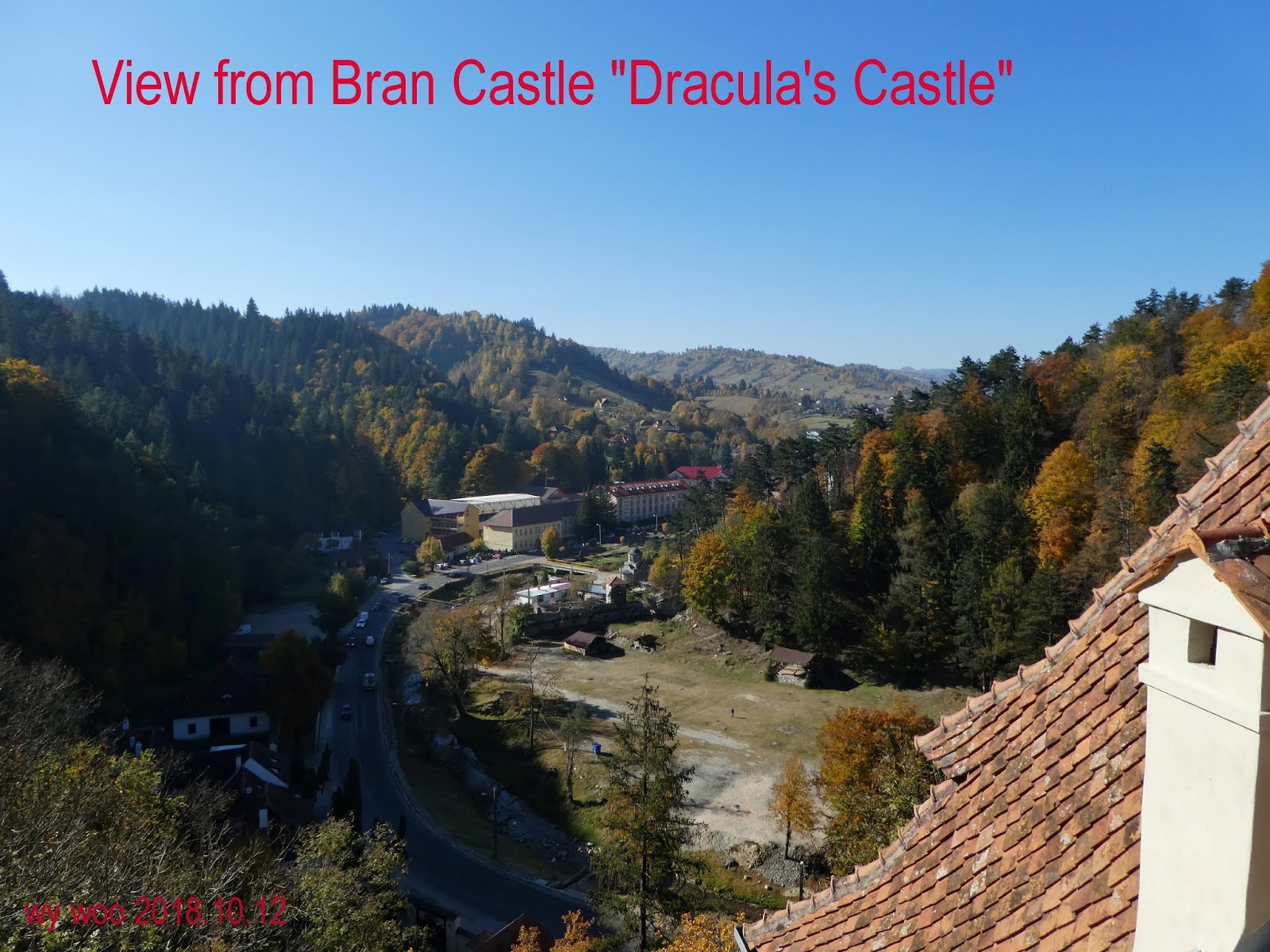
我們參觀了著名的14世紀Bran城堡,它通常被稱為“Dracula城堡”。 現在它作為羅馬尼亞的最後皇后瑪麗(英國維多利亞女王的孫女)的展示館。We visited the famous 14th century Bran Castle and it is commonly known as "Dracula's Castle." Now it serves as a museum displaying collection of Queen Marie (last queen of Romania, granddaughter of Queen Victoria). The castle is owned by the heir of Princess Ileana and Queen Marie (above ruler's picture bottom row left 2 figures).

Click to see more pictures

List of Posts

Above: Click "Home" to see all posts, "Older Posts" to go to next page.

Morocco (Al-Maghrib) 摩洛哥(日落之地)2019 11posts
Rabat 摩洛哥的首都; Tangier 國際和跨文化城市; On way Chefchaouen 藍色的城市; Fez 古老的城市; On way Erfound - Sahara Desert 撒哈拉沙漠
Tinghir oasis, Benhaddou古城 世界遺產; Marrakesh 上帝的故鄉; Agadir 海灘旅遊勝地 Argan trees; Essaouira 海上防禦港口; Casablanca 摩洛哥最大城市
Greece-European earliest civilization 希臘-歐洲最早文明 4 posts
+ Traveling to Greece 希臘 (Hellas) 2018
+ Minoan Civilization, Mycenaean civilization 米諾斯文明,邁錫尼文明
+ 希臘 Greece Trip Videos
巴爾幹半島 Balkans (+希臘 Greece precedent posts) 2018 8 posts
+ 保加利亞、塞爾維亞、羅馬尼亞 Bulgaria, Serbia, Romania tour
+ 巴爾幹半島 Balkans Trip Videos
埃及之旅 Egypt Trip 2018 4 posts
東中歐之旅 Eastern Europe 2015 13 posts
India Tour 2012 8 posts
Turkey Tour 2010 2 posts - Tour,selected videos
Spain and Portugal 2007 - videos
Northern Europe Tour 2005 6 posts - (1)Moscow; (2)St. Petersburg; (3)Denmark - Copenhagen; (4)Norway (video) - Oslo, Geilo, Bergen, Stalheim & Sogndal; (5)Norway - Briskdal Glacier & Geiranger fjord; (6)Stockholm, Cruise & Helsinki, Reunion
Italy tour 2004 3 posts - (1)Pisa, Florence, Sorrento, Capri, Pompeii, Tivoli; (2)Rome, Vatican, Venice & Outside; (3)Lake Maggiore, Siena, Tuscany, Cortina, Trento, Verona, Milan
England & Scotland 2004 4 posts - (1)Cambridge,York,Durham; (2)Hadrain's Wall,Edinburgh,Perth,Scone Palace,Killin,LochLomond; (3)Windermere,Blackpool,Liverpool,Chester,Stratford; (4)Windsor Castle,London
Paris London September 2001

我的旅遊創作網站連結 My Blog Links